

Dayton Howie on BNZ Business Breakfast: How Kiwi Coaches Is Leading New Zealand Bus and Coach Transport with Fair, Transparent Pricing
Kiwi Coaches owner and New Zealand transport industry commentator Dayton Howie has appeared on BNZ Business Breakfast, discussing the fuel crisis, Fuel Adjusted Fares, returning unused charges to passengers and the future of bus and coach transport in New Zealand.
The interview marked another important moment for Kiwi Coaches—and for a New Zealand bus and coach industry navigating fuel volatility, rising operating costs, tourism recovery and growing public expectations around pricing transparency.
https://www.tvnz.co.nz/player/tvepisode/bnz-business-breakfast-s2026-e43-bnz-business-breakfast
Dayton Howie joined BNZ Business Breakfast not simply as the owner of an Auckland bus company, but as an experienced transport operator able to explain what major economic pressures mean for real passengers, schools, tourism businesses, communities and transport providers.
His message was practical and straightforward:
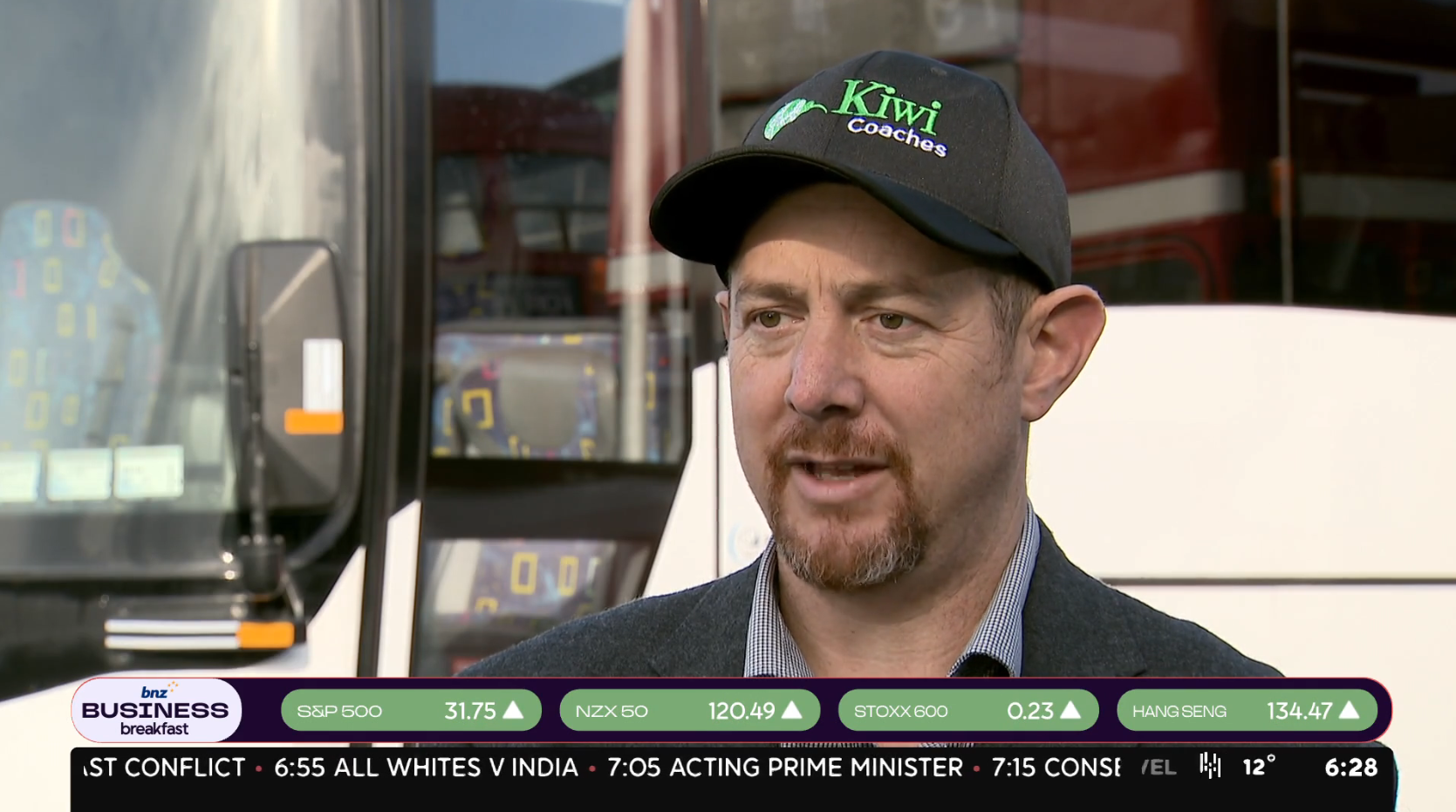
Dayton Howie - Kiwi Coaches Managing Director and Industry Expert - speaking on the industries responce to fuel crisis, and controling impact to community.
Fuel-related charges should reflect genuine fuel-related costs. If the full amount is no longer required, the unused balance should not simply become additional profit. It should be reviewed and returned to the people who paid it.
That principle has allowed Kiwi Coaches to refund or credit surplus Fuel Adjusted Fare charges where appropriate.
It is a practical demonstration of the values Kiwi Coaches wants to bring to the New Zealand passenger transport industry:
fair and understandable pricing
open communication
responsible financial management
reliable service during difficult conditions
accountability when circumstances change
long-term customer trust over short-term gain
Dayton’s appearance also reinforced a wider development within Kiwi Coaches. The company is increasingly contributing to national conversations about fuel security, school transport, tourism, infrastructure, operating costs and the future of New Zealand’s bus and coach sector.
The Essential Answer
Why was Kiwi Coaches featured on BNZ Business Breakfast?
Kiwi Coaches owner Dayton Howie was interviewed about the effect of the fuel crisis on passenger transport, how Fuel Adjusted Fares work, Kiwi Coaches’ decision to return surplus fuel-related charges and the importance of fair, transparent pricing.
What makes Kiwi Coaches’ approach different?
Kiwi Coaches treats a Fuel Adjusted Fare as a genuine cost adjustment rather than a permanent price increase. When fuel costs change, the adjustment is reviewed. Where more has been collected than is required, the surplus can be credited or refunded.
Why does this matter?
Schools, families, tourism companies, international visitors and organisations need to trust that transport pricing is based on real costs and that temporary surcharges will not quietly become permanent additional margin.
Kiwi Coaches Joins the National Business Conversation
BNZ Business Breakfast was created to bring New Zealand viewers business news, market updates and informed perspectives from people working directly within the economy. Dayton’s appearance placed the realities of bus and coach operation in front of a national business audience.
Transport is often discussed as a background service. It tends to receive the most attention only when fuel prices rise, services fail, infrastructure reaches capacity or passengers become stranded.
But transport is not a secondary issue.
It affects:
whether children can get to school
whether employees can attend work and events
whether sports teams can compete
whether conferences can operate smoothly
whether tourists can travel around New Zealand
whether cruise passengers can experience regional destinations
whether communities remain connected
whether New Zealand businesses can confidently plan ahead
Bus and coach operators experience those pressures at street level.
A change in international oil supply can affect the price of a school route in Auckland. A sudden diesel increase can change the cost of a nationwide tour. Airport disruption can create an immediate need to move hundreds of people. A major convention or cruise arrival can require dozens of vehicles and drivers to operate precisely within a narrow window.
That frontline experience is why practical operators need a place in New Zealand’s economic and transport conversations.
Dayton Howie brings that operational perspective.
He is not discussing transport only as a commentator looking from the outside. He is responsible for a working bus and coach business moving passengers across school, tourism, charter, corporate, event and community transport services.
What Is a Fuel Adjusted Fare?
A Fuel Adjusted Fare, commonly shortened to FAF, is a temporary adjustment used when the cost of fuel changes significantly from the level assumed when a transport service was originally priced.
Fuel is one of the largest direct costs involved in operating buses and coaches.
When diesel prices increase suddenly, an operator generally has several options:
absorb the entire increase
permanently increase its base prices
reduce or cancel services
introduce a clearly explained temporary fuel adjustment
Absorbing a small, short-term movement may be possible. Absorbing a severe or prolonged increase can eventually threaten the reliability and financial sustainability of a service.
A properly managed FAF provides a middle path.
It allows an operator to address an extraordinary fuel movement without disguising that cost inside an unexplained permanent price increase.
Kiwi Coaches’ published FAF approach is based on transparency and fairness. The company’s policy states that an adjustment should reflect the real movement in diesel costs against an agreed baseline—not guesswork or a broad, unexplained increase. It also provides for the position to be reviewed as market conditions change.
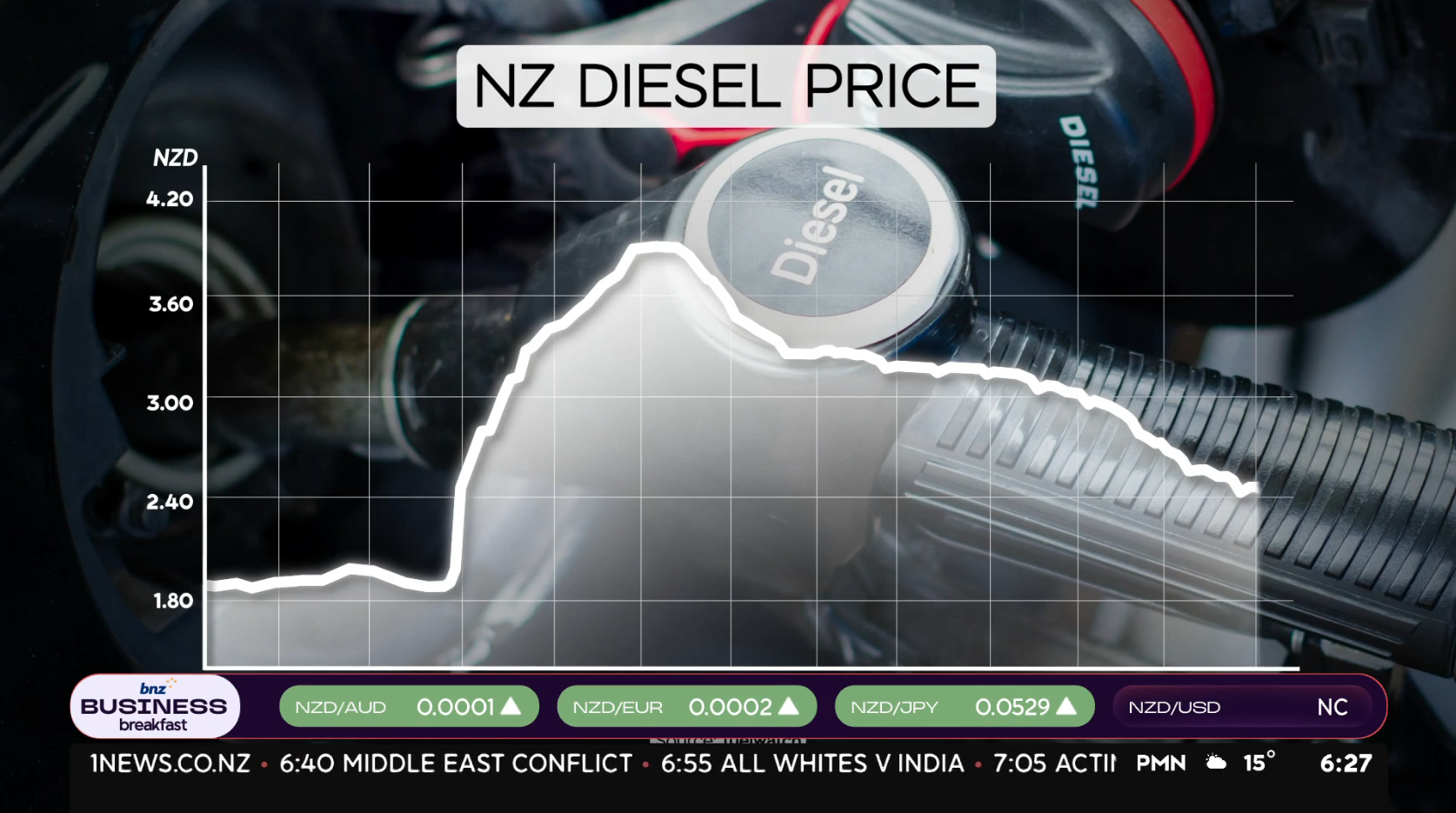
Fuel price change over crisis
A Fair Fuel Adjustment Must Work Both Ways
The most important test of any Fuel Adjusted Fare is what happens when fuel costs begin to fall.
It is relatively easy for a business to add a surcharge when costs rise.
The harder—and more revealing—decision is whether the business reviews that surcharge once the original pressure reduces.
Kiwi Coaches believes a genuine adjustment must work in both directions.
When fuel prices rise significantly, a temporary adjustment may be required to protect service delivery.
When fuel prices ease, that adjustment should be reviewed.
When an amount collected is greater than the genuine fuel-cost impact, the surplus should not automatically be retained as additional profit.
That is why Kiwi Coaches has taken steps to credit or refund unused FAF amounts where appropriate.
This is the difference between a transparent cost-recovery mechanism and an opportunistic surcharge.
A transparent adjustment:
has a clear reason
is connected to a measurable cost
is communicated to the customer
is reviewed regularly
can increase when genuine costs rise
can decrease when genuine costs fall
allows over-recovered amounts to be reconciled
This approach protects the transport operator while respecting the customer.
It acknowledges that a company must remain financially sustainable, but it also recognises that customers should not be expected to pay crisis-level charges after the crisis-level cost has reduced.
Why Returning Surplus FAF Charges Matters
The amount returned to an individual customer may sometimes be modest.
The principle is much larger.
Returning surplus FAF charges tells passengers, parents, schools and commercial clients that the operator is prepared to hold itself accountable.
It shows that the charge was introduced for a specific purpose rather than as a convenient way to quietly increase revenue.
It gives customers evidence that the company is monitoring its pricing rather than applying a surcharge and forgetting about it.
Most importantly, it builds trust.
Transport agreements can last for months or years. School routes operate every day. Tour operators may bring repeated groups throughout a season. Conference organisers need dependable partners for future events. Inbound tourism businesses rely on suppliers who will protect their own reputations with international clients.
These relationships cannot be built solely on the lowest initial quote.
They depend on the customer knowing that the operator will act fairly when circumstances change.
Dayton Howie: A Practical Voice for the New Zealand Bus and Coach Industry
Dayton Howie has increasingly become a visible industry voice on the issues affecting New Zealand passenger transport.
His BNZ Business Breakfast appearance follows earlier media discussion about fuel prices and their effects on school transport, charters and community services.
During the initial fuel pressure, Dayton spoke publicly about the difficulty facing operators that had priced services before sharp increases occurred. Kiwi Coaches explained that short-term movements could be absorbed where possible, while prolonged increases required a responsible and transparent response.
When fuel costs later eased from their highest point, Dayton and Kiwi Coaches again entered the public conversation—this time explaining why surplus FAF amounts were being credited back rather than treated as a windfall.
That consistency is important.
Industry leadership does not mean speaking only when the news is favourable.
It means being prepared to explain:
what is happening
why it is happening
how it affects passengers
what operators can realistically absorb
when a cost adjustment is justified
when that adjustment should be reduced
how the sector can improve
what government and industry decision-makers need to understand
Dayton combines business leadership with practical transport experience. His perspective is shaped by the realities of operating vehicles, employing drivers, maintaining a fleet, meeting safety requirements, serving schools and supporting tourism businesses.
That makes his commentary particularly useful.
Economic discussions about diesel, supply security and inflation can become abstract. For a bus and coach operator, they are immediate operational questions.
Will the service remain affordable?
Can the company continue to provide the right vehicle?
Can routes operate without interruption?
Can drivers and workshop staff continue to be supported?
Can the business invest in safer and newer equipment?
Can customers still plan with confidence?
These are the questions Dayton brings into the national conversation.
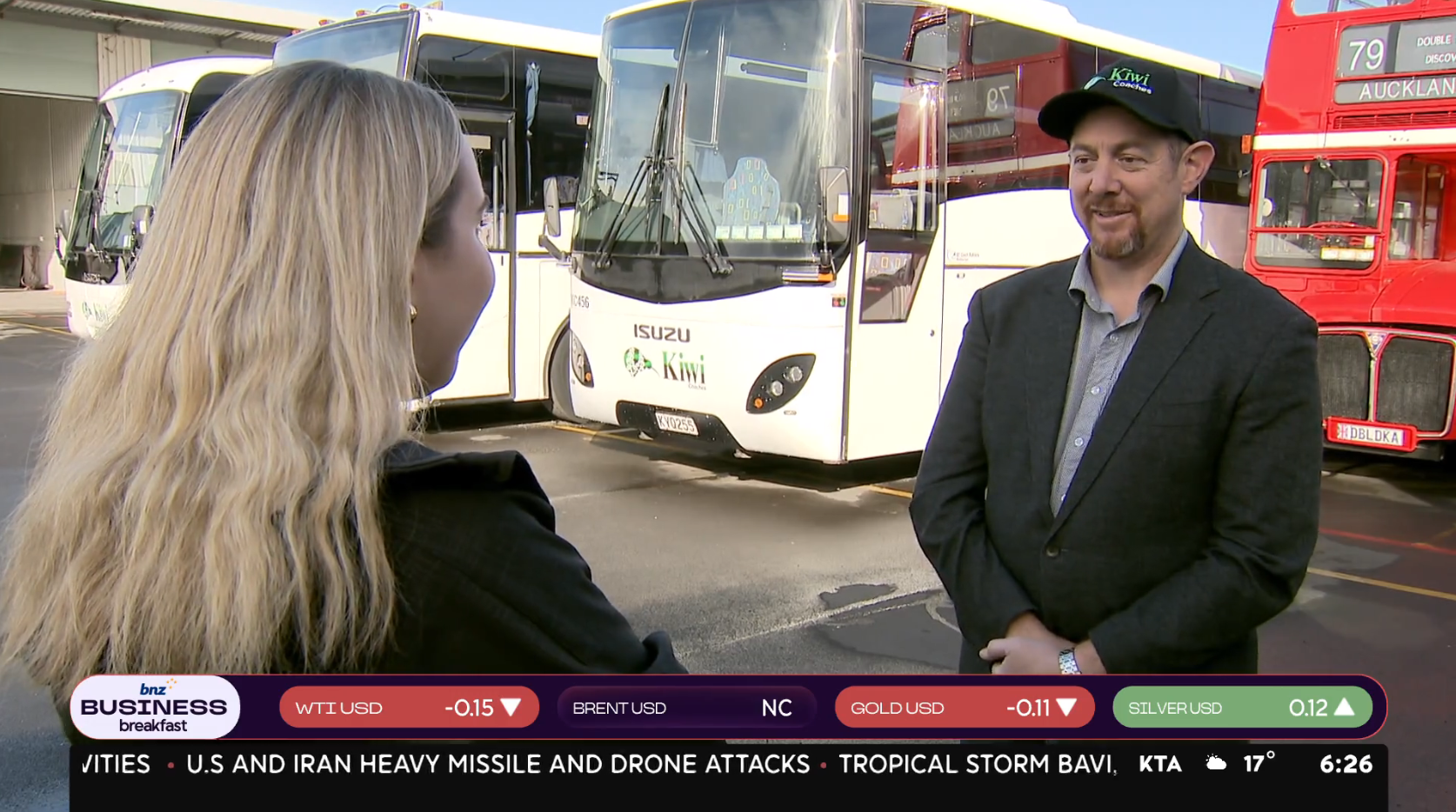
More Than Commentary: Leadership Backed by Operations
It is easy to describe a company as an industry leader.
The phrase matters only when it is supported by action.
For Kiwi Coaches, leadership means:
continuing to operate through volatile conditions
communicating honestly with customers
maintaining vehicles through an in-house operational structure
investing in professional drivers and support staff
assisting schools and communities
supporting New Zealand tourism
responding during urgent transport disruptions
contributing informed views to media and public discussions
reviewing charges when market conditions change
remaining locally accountable
Kiwi Coaches has more than 30 years of experience in passenger transport and operates across school services, private charters, tours, events and group movements. The company remains Auckland-based and proudly New Zealand owned.
That operational history gives the company substance behind its public commentary.
Kiwi Coaches is not attempting to become a media voice instead of being a transport operator.
It is becoming a media and industry voice because it is an active transport operator.
Why New Zealand Ownership Matters
New Zealand’s passenger transport market has undergone significant change.
As companies grow, merge and consolidate, customers increasingly want to know who ultimately makes decisions about their services.
Kiwi Coaches is proudly New Zealand owned and operated.
That does not mean New Zealand-owned companies are automatically perfect or that overseas-owned companies cannot provide good services.
It means accountability remains local.
The people making decisions about pricing, service standards, fleet investment and customer relationships live and work in the same country as the people affected by those decisions.
For Kiwi Coaches, local ownership means:
understanding Auckland’s roads and operating conditions
maintaining direct relationships with schools and communities
responding quickly when clients need assistance
employing New Zealand drivers, mechanics and operational staff
reinvesting in local capability
supporting the New Zealand visitor economy
contributing openly to national transport discussions
protecting a reputation built within the communities the company serves
When Kiwi Coaches makes a decision about returning surplus FAF charges, that decision is made here.
When a school needs urgent assistance, the response is managed here.
When international tourists arrive, the people delivering their New Zealand experience are based here.
When the industry faces a major issue, Kiwi Coaches’ leadership is available to speak publicly about it.
Fair Pricing Is Part of Reliable Transport
Price and reliability are often treated as separate subjects.
They are closely connected.
A quote that is too low to sustain the service can create serious problems later. Vehicles still need maintenance. Drivers still need to be trained and paid. Insurance and compliance obligations remain. Fuel still has to be purchased.
At the same time, customers should not be asked to accept unexplained increases or permanent crisis surcharges.
The responsible position lies between those extremes.
Kiwi Coaches’ approach is to price services realistically, explain extraordinary cost movements and review temporary adjustments when circumstances change.
That gives customers a more dependable basis for planning.
It also helps protect the service itself.
A school bus operator cannot provide long-term reliability if its pricing ignores major costs. A tourism transport provider cannot invest in vehicles and staff if every movement is sold below a sustainable level.
Transparent pricing is therefore not simply an accounting preference.
It is part of operational reliability.
The Importance of Trust in School Transport
School transport depends on an especially high level of trust.
Parents are not simply purchasing a journey. They are asking an operator to become part of their child’s daily routine.
Schools are not only comparing vehicle prices. They are choosing an organisation that will represent the school in front of families and students.
That trust includes:
driver professionalism
vehicle safety
route reliability
communication
billing
incident response
operational continuity
treatment of parents
honesty when costs change
A transparent fuel adjustment policy supports that relationship.
Parents can see why an adjustment has been introduced. Schools can understand the commercial pressure behind it. Both can expect the position to be reviewed rather than left in place indefinitely.
Returning unused FAF funds reinforces that the relationship is intended to be long term.
Protecting Confidence in New Zealand Tourism
The same principle extends beyond school transport.
Kiwi Coaches is part of the frontline delivery network for New Zealand tourism.
For many international visitors, a bus or coach is among their first experiences after arriving in the country.
Their driver may be one of the first New Zealanders they meet.
Their coach may take them from Auckland Airport to their hotel, from a cruise terminal to an attraction, from a conference venue to an evening event or across the country on a multi-day tour.
This means transport operators have responsibilities that go beyond moving people between two points.
They help shape how visitors perceive New Zealand.
Visitors and international travel companies need confidence that:
agreed services will operate
pricing will be clear
vehicles will be appropriate
drivers will be professional
changes will be communicated
unexpected costs will be explained
the operator will stand behind its commitments
Fair and transparent pricing plays an important part in that confidence.
An incoming tour operator may be coordinating hundreds or thousands of passenger movements. A foreign travel company needs confidence that a temporary fuel adjustment reflects a real cost rather than an arbitrary increase.
When an operator reviews and returns an unused balance, it sends a strong message about New Zealand business culture.
It shows that the operator values the relationship and understands that its conduct reflects not only on the company, but also on New Zealand as a destination.
Transport Operators Help Carry New Zealand’s Reputation
Tourism marketing may inspire someone to visit New Zealand.
Transport helps deliver the experience they were promised.
A visitor can see beautiful advertising, book excellent accommodation and plan exceptional activities, but a failed or poorly handled transfer can damage the entire journey.
Bus and coach companies operate at critical points throughout that experience:
airport arrivals
hotel transfers
cruise-port operations
sightseeing tours
conference movements
incentive travel
regional touring
sports and cultural events
emergency travel changes
departure transfers
These services must work.
They must also be delivered by businesses that international partners can trust.
Kiwi Coaches takes that responsibility seriously.
The company’s commitment to transparent FAF pricing is therefore not only a domestic customer-service story. It is part of a wider commitment to protecting confidence in New Zealand tourism and passenger transport.
A Trusted Partner for Inbound Tour Operators
Inbound tour operators and destination-management companies face their own commercial pressures.
They may quote international clients many months before a group arrives. Currency values can change. Fuel markets can move. Hotel rates can shift. Flight schedules can be disrupted.
The last thing these businesses need is an unexplained transport increase.
Kiwi Coaches aims to provide a more transparent relationship.
Where extraordinary fuel changes genuinely affect the cost of operating a movement, the issue should be explained.
Where the additional cost later reduces, the adjustment should be reconsidered.
This helps tour operators communicate confidently with their own customers and protects the reputation of everyone involved in the visitor journey.
It also gives overseas partners another reason to choose a New Zealand-owned transport company with direct local accountability.
Supporting Cruise, Conference and Event Transport
Transparent pricing is equally important in cruise, conference and major-event transport.
These movements can involve:
multiple coaches
carefully timed departures
driver positioning
vehicle staging
traffic management
airport coordination
luggage vehicles
accessibility requirements
last-minute programme changes
standby capacity
The transport component may represent a substantial part of the event or tour budget.
Professional organisers need accurate information. They need to understand what is included, what may change and why.
Kiwi Coaches’ approach is based on clear expectations rather than hidden surprises.
Fuel volatility may be outside an operator’s control.
How that operator communicates and accounts for it is entirely within its control.
The Future of Bus and Coach Transport in New Zealand
Fuel was the immediate subject of Dayton’s BNZ Business Breakfast appearance, but the discussion points toward much larger questions.
New Zealand passenger transport is entering a period of significant change.
The sector must respond to:
changing fuel markets
fuel-security concerns
fleet renewal requirements
electric and lower-emission vehicles
charging and depot infrastructure
driver recruitment
skills and training
increasing compliance expectations
school-transport demand
public-transport reform
tourism growth
cruise-sector recovery
major events and conventions
regional connectivity
road congestion
ageing infrastructure
growing customer expectations
No individual operator can solve all of these issues.
But experienced operators should contribute to the discussion.
Government, councils, schools, tourism leaders and industry organisations benefit when the people planning policy also hear from those delivering passenger services each day.
Dayton Howie and Kiwi Coaches intend to remain part of that conversation.
Not through commentary for its own sake, but by bringing practical operating experience to questions that affect New Zealanders and visitors.
What Should Customers Expect from a Responsible Transport Operator?
Customers arranging bus or coach transport should be able to ask clear questions and receive clear answers.
Is the quoted price sustainable?
An unrealistically low price can create reliability problems later. Ask what is included and whether likely operating costs have been accounted for.
How are fuel-related changes managed?
The operator should explain whether a fuel adjustment can be applied, what triggers it and how it is calculated.
Is the adjustment reviewed?
A temporary increase should not automatically remain forever. Ask how often the operator reviews its FAF position.
Can the adjustment move downward?
A fair mechanism should respond when fuel costs ease, not only when they rise.
What happens to any surplus?
Ask whether over-recovered fuel amounts will be credited, refunded or reconciled.
Who makes the decisions?
Understanding the ownership and management structure can help customers know where accountability sits.
Does the operator have real operational depth?
Vehicles alone do not provide reliable transport. Look for experienced drivers, maintenance capability, route planning, administration, communication and contingency support.
Why Choose Kiwi Coaches?
Kiwi Coaches provides passenger transport for schools, tourism businesses, corporate groups, conferences, events, sports teams, community organisations and private clients.
Customers choose Kiwi Coaches for:
proudly New Zealand-owned operation
more than 30 years of passenger-transport experience
experienced local drivers
school bus services
private bus and coach hire
Auckland Airport group transfers
New Zealand tour transport
inbound tourism support
cruise passenger transport
conference and event movements
corporate transport
sports-team travel
emergency and last-minute transport support
transparent commercial communication
practical industry knowledge
The company combines the capability of an established transport operator with the accountability and accessibility of a locally owned New Zealand business.
From Bus Operator to Industry Leader
Kiwi Coaches’ development is not measured only by the number of vehicles it operates.
Leadership is also reflected in the standards a company is prepared to set.
During the fuel crisis, Kiwi Coaches did not pretend the cost pressure was insignificant.
It explained the reality.
When conditions changed, it did not ignore the improvement.
It reviewed the adjustment.
When an unused surplus existed, it acted to return that value to customers where appropriate.
Dayton then took that message into the national business conversation.
This is what credible industry leadership looks like:
acknowledge the problem
explain it honestly
protect service continuity
treat customers fairly
review the situation
accept accountability
contribute constructively to the future of the sector
Frequently Asked Questions
Who is Dayton Howie?
Dayton Howie is the owner and Managing Director of Kiwi Coaches, a New Zealand-owned passenger transport company. He is also an increasingly prominent commentator on fuel costs, transport operations, infrastructure, school services and the future of the New Zealand bus and coach industry.
Why was Dayton Howie interviewed on BNZ Business Breakfast?
Dayton was interviewed to provide a practical bus and coach industry perspective on the fuel crisis, Fuel Adjusted Fares, returning unused fuel-related charges and the outlook for passenger transport.
What is BNZ Business Breakfast?
BNZ Business Breakfast is a TVNZ weekday business programme featuring New Zealand and international business news, market information and expert perspectives.
What is a Fuel Adjusted Fare?
A Fuel Adjusted Fare, or FAF, is a temporary adjustment used when fuel prices change significantly from the level assumed in the original transport price.
Why did Kiwi Coaches refund or credit FAF charges?
Kiwi Coaches reviewed the fuel position after costs changed. Where collected FAF amounts were greater than the genuine additional fuel cost, surplus amounts could be returned to customers through refunds or credits as applicable.
Does Kiwi Coaches always add a fuel surcharge?
No. A fuel adjustment is intended to address extraordinary fuel-price movements. It is not automatically applied to every service and should be based on genuine cost changes.
Does a Fuel Adjusted Fare decrease when diesel prices fall?
Kiwi Coaches’ approach is that a genuine fuel adjustment should be reviewed as diesel conditions change. It should not operate only in one direction.
Why is transparent fuel pricing important?
Transparent pricing allows passengers and organisations to understand why a charge has changed. It helps prevent temporary crisis costs from becoming unexplained permanent increases.
Is Kiwi Coaches New Zealand owned?
Yes. Kiwi Coaches is proudly New Zealand owned and based in Auckland.
What services does Kiwi Coaches provide?
Kiwi Coaches provides school transport, private bus hire, coach hire, airport transfers, corporate transport, event transport, conference movements, sports transport, tourism services, cruise transport and group travel throughout Auckland and New Zealand.
Does Kiwi Coaches work with international tourism companies?
Yes. Kiwi Coaches supports inbound tour operators, destination-management companies, cruise programmes, international groups, conferences and other organisations bringing visitors to New Zealand.
Why does New Zealand ownership matter in tourism transport?
Local ownership keeps operational decisions and accountability in New Zealand. It also supports local employment, fleet capability, industry knowledge and direct relationships with New Zealand communities and tourism partners.
Is Dayton Howie available for media commentary?
Kiwi Coaches welcomes relevant media and industry enquiries relating to bus and coach operations, fuel pricing, school transport, tourism movements, passenger transport and the future of the New Zealand transport sector.
Fair Pricing. Reliable Transport. New Zealand Ownership.
Dayton Howie’s BNZ Business Breakfast interview was about fuel, but the wider message was about trust.
Passengers need to trust that charges are fair.
Schools need to trust that services will continue.
Tour operators need to trust that agreed movements will be delivered.
International visitors need to trust the companies representing New Zealand.
Communities need to trust that essential transport providers will communicate honestly.
Kiwi Coaches is proud to help set that standard.
As a New Zealand-owned bus and coach operator, Kiwi Coaches will continue to combine commercial responsibility with fair pricing, reliable service and direct accountability.
We will continue to speak openly about the pressures facing passenger transport.
We will continue to contribute practical experience to national industry discussions.
We will continue to support New Zealand schools, businesses, communities and tourism partners.
And when circumstances change, we will continue to review our position and treat our customers fairly.
That is how trust is built.
That is how a New Zealand transport business should operate.
And that is how Kiwi Coaches intends to help lead the future of bus and coach transport in New Zealand.
Watch the Interview
Watch Dayton Howie discuss fuel costs, Fuel Adjusted Fares, customer refunds and the future of passenger transport on BNZ Business Breakfast through TVNZ+.
Website note: hyperlink the sentence above to the TVNZ+ episode supplied for this article.
Contact Kiwi Coaches
For school transport, private coach hire, corporate movements, tourism transport, cruise services, conferences or group travel:
Kiwi Coaches
Proudly New Zealand owned
23A Mahunga Drive
Māngere Bridge
Auckland 2022
Email:info@kiwicoaches.co.nz
Phone: 09 636 5232
Media and Industry Enquiries
Ben Dale
Head of Marketing & Sales
Kiwi Coaches
Email:ben@kiwicoaches.co.nz
By Ben Dale, Head of Marketing & Sales, Kiwi Coaches